Call This Saturday to Get $50 Off

Schedule a Local Plumber in Morgantown Area - Call us Now to Get $35 OFF.
4.8 / 5 Ratings based on 794 reviews Great Plumbers, Great Reviews

Call This Saturday to Get $50 Off
Schedule a Local Plumber in Morgantown Area - Call us Now to Get $35 OFF.

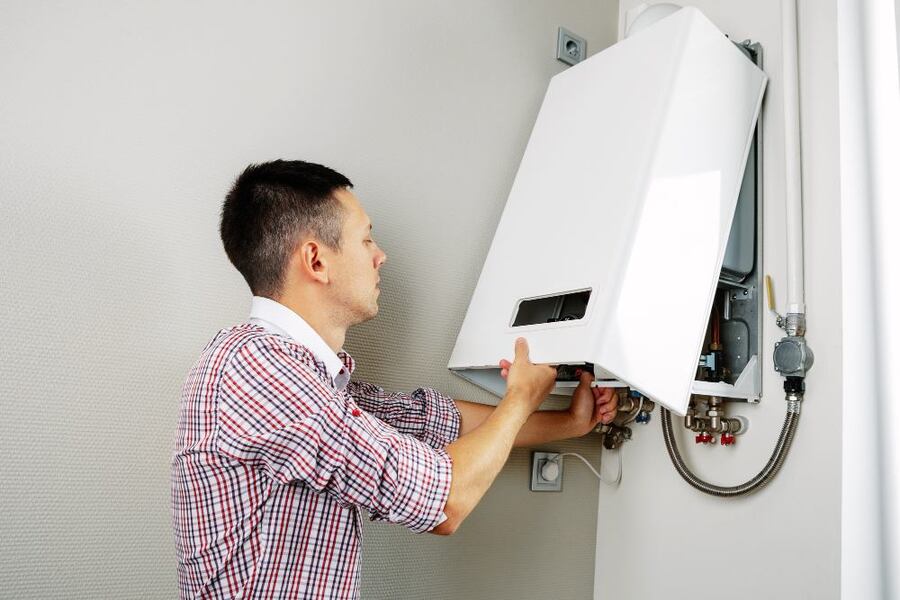
Stepping into a lukewarm shower is a problem that demands an answer right away. A water heater that's not working properly can point to several different issues depending on the type of unit you have, how old it is, and what's been happening with it leading up to the problem. Mr. Rooter Plumbing diagnoses these kinds of calls all the time, and our team knows that the cause isn't always what homeowners expect. Keep reading to learn about the most likely explanations.
The thermostat is the first place to check when your water heater stops producing adequate heat. Most tank water heaters have a thermostat set between 120 and 140 degrees Fahrenheit. If the dial has been bumped or if the thermostat has drifted out of calibration, the unit may be heating to a lower temperature than you think.
Testing the thermostat is simple. Turn the temperature up, wait an hour, and then run the hot water tap. If the water temperature improves, you probably had a setting issue rather than a mechanical failure. If nothing changes, the thermostat may have failed and needs to be replaced. A licensed plumber can verify this with a meter and confirm if the control is sending the correct signal to the heating components.
Thermostat problems are pretty common, but they can also mask deeper issues. If the thermostat is working correctly and the water still isn't reaching the right temperature, the problem is somewhere else.
Electric water heaters rely on one or two heating elements to warm the water inside the tank. Most units have a top element and a bottom element. The bottom element takes care of the bulk of the heating load during normal use. The top element activates when demand is higher than normal or when recovery is needed after heavy use. When one element burns out, you'll notice a pattern:
A failed heating element is a fixable problem. An experienced plumber can test each element with a multimeter, find out which one has failed, and replace it without replacing the entire unit. A water heater repair at this level is cost-effective when the tank is still in good condition.
Gas water heaters heat water through a burner assembly at the base of the tank. The pilot light ignites the burner, and the thermocouple monitors if the pilot is lit. If the pilot light goes out, the thermocouple cuts off the gas supply as a safety measure. If there's no ignition, then there's no heat.
Relighting the pilot light is something most homeowners can do using the instructions on the unit's label. If the pilot won't stay lit after relighting, or if it goes out repeatedly, the thermocouple could be worn out and need replacement. A malfunctioning thermocouple is one of the most common gas water heater repairs and doesn't require replacing the whole unit.
Gas supply issues are another possibility. A partially closed shutoff valve, a problem with the gas line, or low pressure from the utility side can all reduce the burner's output. If other gas appliances in your home are also underperforming, contact your gas utility first. If the problem is just with the water heater, schedule a plumbing service in Monongolia County to inspect the gas connections and burner assembly.
The dip tube is a plastic pipe inside the tank that directs incoming cold water to the bottom, where it gets heated before rising to the top for use. It's a simple part, but when it breaks or deteriorates, cold water enters at the top of the tank instead of the bottom. The cold water mixes with the hot water waiting at the outlet, and what comes out of your tap is lukewarm rather than hot.
Broken dip tubes are more common in water heaters manufactured between 1993 and 1996, but they can fail in any unit. The symptoms mimic other problems, which makes this one harder to diagnose without inspecting the tank. Signs that point specifically to a dip tube failure include:
Replacing a dip tube is a basic repair when done by a qualified plumber. The part is inexpensive, and labor costs are modest compared to a full unit replacement. If your water heater is otherwise in good shape, this repair extends its life without a major investment.
Not every water heater problem justifies a repair. The unit's age is the most important factor in the decision. Most tank water heaters last 8 to 12 years. A unit within that range that has a single failed component is usually worth repairing. A unit that's 13 or 14 years old and experiencing its second or third failure in two years isn't.
Repair costs relative to replacement costs matter too. A general rule in the industry is that if the repair is more than 50 percent of the cost of a new unit, and it's past the midpoint of its lifespan, replacement is the better investment. A new water heater also comes with a warranty, improved energy efficiency, and a predictable service life.
A professional plumbing service will give you a clear answer after diagnosing the unit. They can tell you the condition of the tank, the anode rod, the connections, and the components.
Lukewarm water isn't something to wait on. The longer a failing component runs, the more stress it puts on the rest of the system. Whether the fix is a new thermostat, a heating element, a dip tube, or a full replacement, the diagnosis has to come first. Mr. Rooter Plumbing provides water heater repair for gas and electric units. A reliable plumber will arrive ready to diagnose the problem on the first visit and explain your options. Call us to schedule a service and get your hot water working again.
May,02,2026
Stepping into a lukewarm shower is a problem that demands an answer right away. A…
Read More+
Apr,28,2026
Nothing is more frustrating than a clogged drain. Whether it is an overflowing kitchen sink…
Read More+
Apr,18,2026
Basement flooding rarely announces itself. One heavy rainstorm at the wrong moment and suddenly your…
Read More+